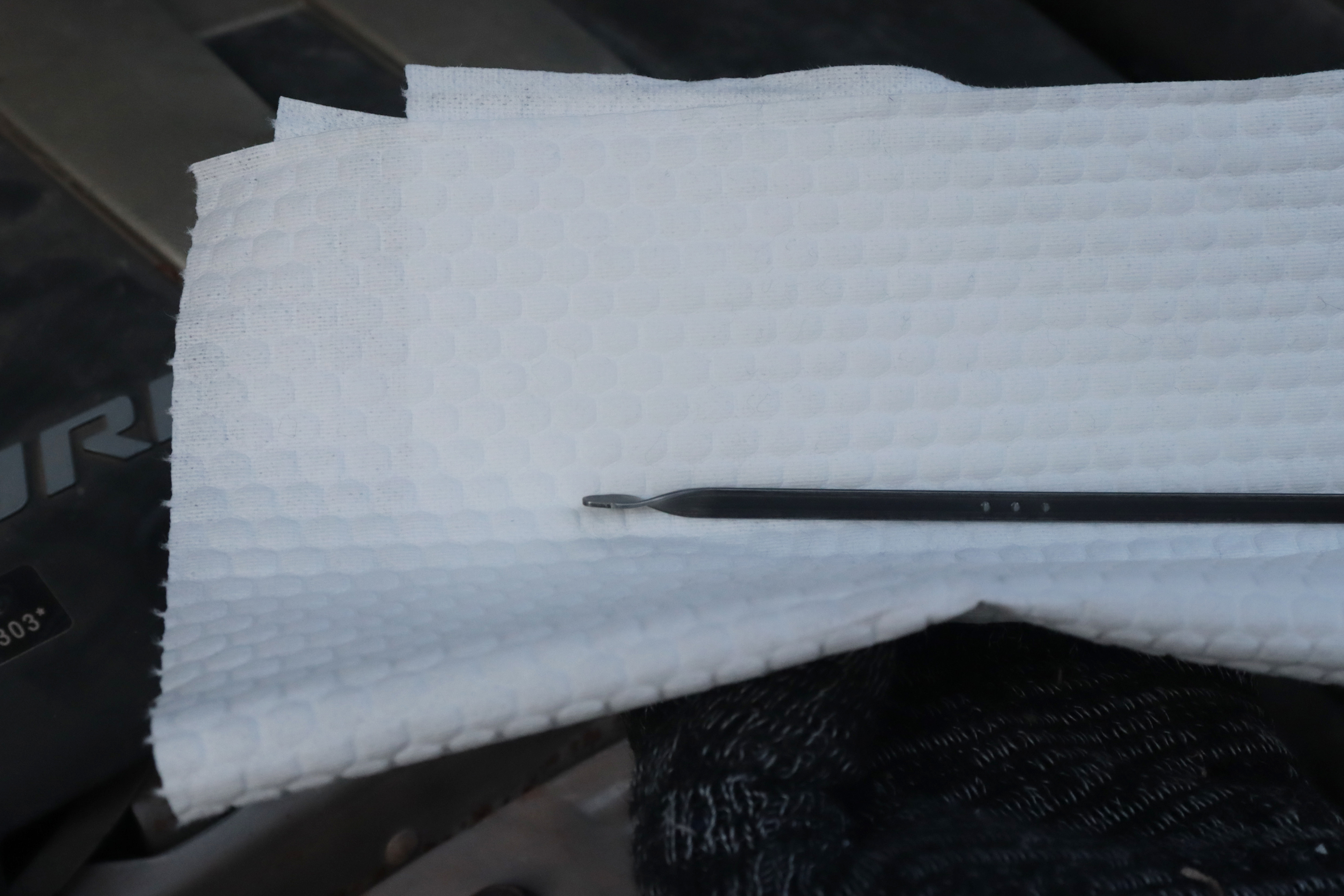
In the field of industrial cleaning, chicken-skin-textured industrial wipes have gradually replaced conventional flat wipes as the standard for medium to heavy oil stain scenarios, thanks to their core advantages of "strong oil absorption, wear resistance, and low loss." However, many users understand the "what" but not the "why"—why do different products with the same texture exhibit significantly varying oil absorption effects? How can common pitfalls be avoided in daily use to maximize performance? Taishuo breaks down the practical value of chicken-skin-textured industrial wipes from three dimensions: process details, practical techniques, guiding you to fully grasp their utility.
First. Deep Dive into the Process: The "Detail Differences" of Chicken Skin Texture Determine Performance Limits
Not all chicken-skin textures qualify as "premium." Subtle differences in their embossing techniques and pattern parameters can directly affect oil absorption efficiency and service life. The true industrial-grade chicken-skin textures conceal these craftsmanship details:
1. Embossing Process: Dry vs. Wet Method, Suitable for Different Scenarios
The forming process of chicken claw patterns is primarily divided into dry embossing and wet embossing, each with its own suitable applications: Dry embossing involves pressing the pattern onto the paper after it has been formed, featuring advantages such as three-dimensional, full textures and excellent rebound properties, making it ideal for heavy oil stains and repeated wiping scenarios where the paper resists collapse under pressure. Wet embossing, on the other hand, is performed while the fibers are not yet fully dry, resulting in patterns that better conform to the paper. It offers slightly faster oil absorption but weaker flexibility, making it more suitable for light to medium oil stains and single-use cleaning scenarios. During procurement, tactile assessment can be used to distinguish between the two: dry embossing wipes have pronounced texture relief and a stiffer feel, while wet embossing wipes are softer with less elastic texture.
2. Texture Parameters: Density and Depth Affect Oil Absorption Efficiency
High-quality chicken claw textures have strict standards for density and depth: the texture density typically ranges from 8 to 12 lines per square centimeter. Excessively sparse patterns result in insufficient oil storage, while overly dense patterns may block gaps, hindering oil penetration. The texture depth must reach 0.3-0.5mm; insufficient depth prevents the formation of effective oil storage cavities, leading to easy oil backflow after absorption, whereas excessive depth reduces paper flatness and affects fine area wiping. Visual inspection can determine quality: superior products feature evenly intersecting textures without localized irregularities. Light fingernail scratching should reveal noticeable depressions that quickly recover upon release.
3. Fiber Ratio: The "Golden Ratio" of Wood Pulp and Polyester
The fiber ratio of chicken wire wipe paper directly determines the balance between oil absorption and toughness. Practical experience has proven that a "golden ratio" of 70%-80% wood pulp and 20%-30% polyester fiber is optimal—wood pulp fibers ensure oil affinity and water absorption, while polyester fibers enhance toughness and tear resistance, making it suitable for most industrial oil contamination scenarios. If the wood pulp proportion is too high, the paper lacks sufficient toughness and is prone to tearing and shedding; conversely, an excessive polyester fiber ratio reduces oil absorption, limiting its use to solvent-resistant but low-oil environments. For high-end precision applications, pure polyester chicken wire wipe paper with specialized embossing techniques can be selected to meet the requirements of zero shedding and resistance to strong solvents.
Second. Practical Techniques: How to Make Chicken Wire Wiping Paper More "Durable and Cost-effective"
Mastering the correct usage method can enhance the oil absorption efficiency of chicken claw wipes by over 20% while reducing material consumption. The key operational points for different scenarios are as follows:
1. Medium to heavy oil stains: "Press + one-way wipe" combination method
For heavy oil stains on parts such as machine tools and engines, avoid back-and-forth friction (which can lead to stain spreading and paper damage). Instead, use the "press and adsorb first, then wipe in one direction" method: cover the oil-stained surface with a wipe, press lightly for 3-5 seconds to allow the concave areas of the waffle texture to fully absorb the oil, then wipe gently in a single direction to remove residual oil films. Each wipe can be used in sections—first apply the side with dense waffle patterns to remove heavy oil stains, then use the edges to wipe away lighter stains, maximizing the use of each single wipe.
2. Mixed stains: "Absorb oil first, then water" for systematic cleaning
For mixed stains of "oil + water + debris" (such as machining coolant mixed with automotive water stains and oil), follow the sequence of "absorb oil first, then absorb water, and finally remove debris": use the raised part of the chicken foot pattern to scrape off floating oil and large debris from the surface, then lightly press the paper to absorb residual oil, and finally wipe away the moisture with a clean area. Avoid absorbing water first and then oil, as this would occupy the oil storage space and reduce oil absorption capacity.
3. Precision parts: "Foldable design" to prevent secondary contamination
When wiping circuit boards and precision metal components, fold the chicken wire texture wipe into small pieces for use. This reduces the contact area of the hands with stains, preventing oil transfer. Additionally, the folded texture has stronger three-dimensional effects, allowing precise fitting into the gaps of precision parts while minimizing the risk of fiber shedding. Note: Wipes used for precision components must be disposable and not reused on different parts to avoid cross-contamination.
Third. Common Misconceptions: These Incorrect Usage Patterns Are Wasting Your Consumables
Many users find chicken-wire-woven wiping paper "ineffective," which stems from a common misconception that not only reduces cleaning efficiency but also increases consumable costs
Misconception 1: Rubbing hard to pursue "quick oil removal"
In industrial oil stain cleaning, vigorous scrubbing is the most common mistake. The core advantage of chicken-skin pattern is "adsorption and storage," not "scraping and oil removal." Vigorous scrubbing damages the oil-holding cavities within the paper, causing oil stains to reseep while accelerating fiber shedding and premature paper degradation. The correct method is "gentle pressing for adsorption + unidirectional wiping," relying on the texture structure to naturally capture oil stains.
Misconception 2: Neglecting storage conditions leads to performance degradation
The texture elasticity and oil absorption performance of chicken claw-patterned wiping paper are affected by storage conditions. Prolonged exposure to humid or greasy environments will cause the paper to absorb moisture and dust, leading to texture collapse and reduced oil absorption. Direct sunlight exposure will make the fibers brittle, decrease toughness, and increase susceptibility to tearing. Proper storage method: Seal and store in a dry, clean warehouse, keeping it away from oil and water sources. Use the opened portion promptly, and seal any unused parts in a plastic bag.
Misconception 3: Blindly Choosing High-Grammage Products Without Considering the Context
Some users believe that "higher grammage means better performance" and blindly choose chicken claw wipe paper with a grammage above 120g/㎡. In reality, grammage should be matched to the scenario: high-grammage products are more durable and suitable for heavy oil stains but lack flexibility, making them difficult to conform when wiping precision parts or gaps. For light to medium oil stains, products with 80-100g/㎡ grammage suffice, balancing flexibility and oil absorption while reducing material costs.
Misconception 4: Using ordinary cleaning agents in combination can damage the performance of paper
Certain industrial cleaning agents (such as highly corrosive solvents and high-concentration alkaline cleaners) can damage the fiber structure of chicken-wire wipe paper, leading to dissolution and shedding. If cleaning agents are required, choose types compatible with the paper: wood pulp + polyester composite material can be paired with alcohol or IPA (isopropanol); pure polyester material can be used with most industrial solvents but must avoid highly corrosive solvents. Conduct a small-scale test before use to ensure the paper does not dissolve or discolor before proceeding.
Four、 Scene extension: These "hidden scenes" can also be handled by chicken claw patterns
In addition to common mechanical processing and auto repair scenarios, chicken claw pattern industrial wiping paper can also demonstrate excellent performance and expand its value in the following hidden scenarios:
1. Warehousing and logistics: equipment maintenance and oil pollution protection
Used for daily maintenance of storage equipment (such as forklifts and cranes), wiping off lubricating oil residues in chains and bearing parts. At the same time, before the equipment is idle, use chicken claw pattern wiping paper to absorb surface oil stains and apply rust proof oil. The oil storage capacity of the pattern can evenly adhere the rust proof oil, improving the protective effect.
2. Food processing: Cleaning of oil contaminated areas (non-contact food)
In the non-contact food area of the food processing workshop (such as frying equipment shells, oil pipelines), chicken claw pattern wiping paper can quickly absorb edible oil and lubricating oil stains, and has low chip characteristics to avoid fiber residue, which meets the workshop hygiene standards. At the same time, its wiping resistance is suitable for high-frequency cleaning needs.
3. Hardware coating: pre-treatment, oil pollution cleaning
Before painting hardware, it is necessary to thoroughly remove surface rust proof oil and cutting oil. Chicken claw pattern wiping paper can quickly absorb oil stains, while raised patterns can scrape off small impurities on the surface, avoiding oil stains and impurities from affecting the painting effect and improving product qualification rate.
Five、 Summary: Choosing and using correctly is the core value of chicken claw patterns
The performance of chicken claw pattern industrial wiping paper is determined by both process details and usage methods - selecting high-quality products with "dry embossing and gold fiber ratio", and then using practical techniques of "pressing adsorption and zoning use" to avoid common misconceptions, can improve cleaning efficiency while reducing consumable costs. The core of industrial cleaning is "precise adaptation", and the value of chicken claw pattern wiping paper lies in providing an "efficient and economical" solution for medium and heavy oil pollution scenarios, rather than blindly pursuing high-end parameters.
 20 years
Industry experience
20 years
Industry experience

 CN
CN  CN
CN